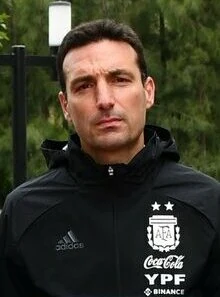
Scaloni's tactical success with Argentina comes from one core idea: do not let the stars disconnect from the structure. The team must stay compact enough to defend, but flexible enough to free the decisive players.
That matters most in World Cup matches, where the margins are tiny and a single bad transition can undo long stretches of control.
Argentina under Scaloni usually works from a flexible 4-3-3 or 4-4-2 base, with strong midfield support, compact defending, and carefully managed freedom for Messi in the final third.
The system works because it protects the middle, keeps support runners close to the playmaker zone, and does not force the team into chaotic attacking shapes.
Overview of Argentina's Tactical Shape
The key to Argentina's shape is that it is flexible without becoming loose. The same team can look like a 4-3-3 in buildup, a 4-4-2 block without the ball, or a narrower attacking structure once the final pass is near.
That flexibility is useful because it gives the side several ways to solve the same game. Argentina does not need one exact pattern to function well.
How Argentina Uses This System
Defensive shape and structure
Defensively, the team protects the central lane first. The midfield stays compact, the line behind it remains connected, and the press is usually triggered with control rather than emotion.
That is one of Scaloni's best tactical qualities. Argentina is not desperate to win the ball in the first second if the shape would break in doing so.
Attacking patterns and transitions
In attack, Argentina wants enough patience to draw pressure and enough movement around the ball to open the next lane. Once the shape bends, the final pass comes quickly.
The team is especially dangerous when Lionel Messi can receive with support close enough to combine and when the runners around him attack the next gap at the right time.
Key players and their roles
Messi remains the creative centre, but the system also depends on the midfield being disciplined enough to protect him and active enough to support the attack. That is why the balance players matter so much in this setup.
Scaloni has been strong at giving the creators freedom without forcing them to solve every phase alone. That is what makes the whole side feel mature rather than star-dependent.
Strengths of This Approach
The biggest tactical strength is balance. Argentina can defend deep enough when needed, control midfield spaces, and still create with high-end quality once the match opens.
The other strength is adaptability. Scaloni's team can win through control, transition, or emotional toughness depending on the night.
Weaknesses and Vulnerabilities
The main weakness is that the system still needs clean support around the playmaker zone. If the creators are isolated, the attack can lose some of its flow.
There is also the natural challenge of maintaining the same mobility and intensity as the cycle ages.
How It Could Play Out at World Cup 2026
Argentina should again be tactically strong in 2026 because the shape remains clear, the midfield base is reliable, and Scaloni still knows how to protect the team in high-pressure moments.
If the support structure around Messi and the central midfield stays sharp, the defending champions will be one of the hardest teams to eliminate.
Frequently Asked Questions
Argentina often starts from a flexible 4-3-3 or 4-4-2 base depending on the opponent and the phase of play.
Because the structure gives him freedom in decisive zones while the midfield and wide support protect the rest of the team.
Its main strength is balance between compact defending, midfield control, and high-end chance creation.
The attack can slow down if the creators are isolated and the support runs arrive late.
Conclusion
Scaloni's Argentina still works because the system is flexible, compact, and clear about how to protect its match winners.
That is why the champions remain one of the tournament's most complete tactical teams.