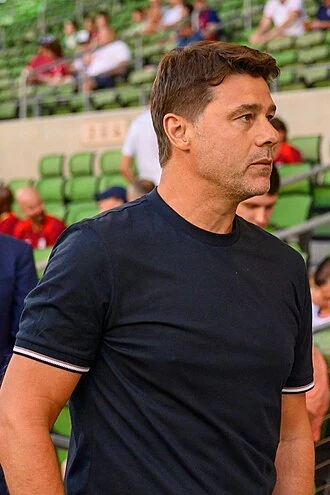
U.S. Soccer appointed Mauricio Pochettino on 10 September 2024 and described him as a coach known for dynamic styles of play, youth development, and building cohesive teams. That was not a vague branding line. It was a clear clue about the tactical shift the federation wanted before the home World Cup.
For the USA, the core issue is simple. Can the team turn energy and talent into a structure strong enough to win high-pressure matches against better technical opponents? Pochettino was hired to answer exactly that.
Pochettino wants the USA to be more aggressive without the ball and more vertical after regains. The side often starts from a 4-2-3-1 or 4-3-3 framework, but the tactical identity is bigger than the numbers on paper: pressure early, run forward quickly, and keep the team emotionally switched on.
That approach fits the player pool well because the USA has athleticism, range, and several players who enjoy fast transitions. The risk is whether the group can also manage slower, more tactical knockout games with the same maturity.
Early Life and Coaching Career
Background and playing career
Mauricio Pochettino was born on March 2, 1972, and made his name first as a defender and later as a high-level coach with a strong focus on pressing, structure, and emotional intensity.
That background makes him a very different type of appointment from the coaches the United States has often chosen in previous cycles.
Coaching career start and progression
Pochettino coached Espanyol, Southampton, Tottenham, Paris Saint-Germain, and Chelsea before U.S. Soccer brought him in. His club work gave him a reputation for raising intensity and building coordinated, front-foot teams.
Mauricio Pochettino at United States
How he was appointed
U.S. Soccer appointed Pochettino in September 2024 because the federation wanted a coach with elite-club experience, a sharper pressing identity, and enough authority to handle a home World Cup.
Results, achievements, and current standing
As of March 17, 2026, Pochettino is still the coach of the United States and one of the most heavily watched figures in the tournament because the host nation's ceiling is tied closely to his work.
Tactical Style and Formation
Preferred system and how the team plays under him
The USA under Pochettino is trying to become harder to live with. That means more coordinated pressing, cleaner vertical support, and less passive possession that only moves the ball sideways.
He also wants the team to think like a collective. The press, the build, and the counterattack are not separate ideas. They are supposed to flow into each other so the team always has momentum after the first action.
Without the ball, the USA is built to jump forward and disrupt rhythm rather than simply retreat into a low block. The first line wants to force rushed touches, while the midfield tries to back up the pressure instead of sitting too far away from it.
That can give the team real edge, especially at home. But it also means the distances behind the press must stay tight, because a broken first wave can leave the defence facing awkward open spaces.
With the ball, Pochettino does not want sterile control. He wants forward movement. Once the USA wins it or reaches the middle third, the
That makes transition speed a big part of the model. The team should look most dangerous when it can attack before the opponent resets, using wide runners and quick support through the centre.
World Cup 2026 Plan
Squad approach, key selections, and tournament goals
The system depends on midfield discipline and collective work rate as much as on individual stars. If the central players cover space well and pass forward cleanly, the whole attack becomes more dangerous.
The USA does not only need talent to rise in 2026. It needs synchronized effort in every phase so the tactical plan survives pressure.
The USA should arrive in 2026 as a dangerous host rather than a true top-tier favorite. That still makes Pochettino's project important, because knockout football often rewards teams that can create one or two decisive aggressive moments.
If the pressing structure holds and the team handles the emotional weight of home soil, the USA can absolutely become one of the more difficult round-of-16 or quarter-final opponents in the field.
Personal Info
| Full name | Mauricio Pochettino |
|---|---|
| Date of birth | March 2, 1972 |
| Age | 54 |
| Nationality | Argentina |
| Current team | United States |
| Contract until | 2026 World Cup |
| Coaching style | High press and vertical transitions |
| Major honors | Ligue 1, Coupe de France, Trophee des Champions |
Salary and Net Worth
Earnings and estimated net worth
ESPN and CBS Sports reporting around his appointment put his United States salary at about USD 6 million per year through World Cup 2026, making him the highest-paid coach in U.S. Soccer history.
Net worth: Will be updated soon.
Frequently Asked Questions
Mauricio Pochettino is the coach profiled here through the lens of United States and the World Cup 2026 cycle.
High press and vertical transitions
2026 World Cup
The goal is to turn the United States into a more complete, more aggressive, and more mature knockout team on home soil.
Conclusion
Pochettino has given the USA a sharper tactical edge and a clearer competitive identity ahead of 2026.
The