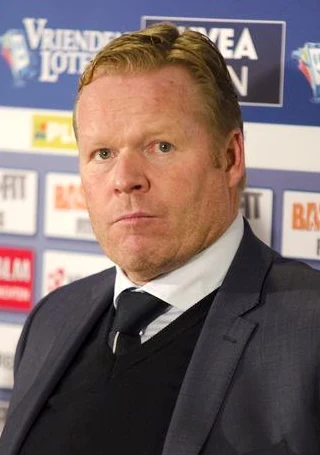
Ronald Koeman has not tried to turn the Netherlands into a museum version of old total football. His job has been more practical than that. He has worked to make the side balanced, physically ready, and good enough to manage difficult matches without losing all of its technical identity.
That is why the current Netherlands looks more pragmatic than romantic. The side still has quality on the ball, but the bigger point is that it now values structure and game management more openly.
Quick Answer
Koeman's Netherlands is built around defensive balance, flexible buildup, and enough width to keep the team dangerous without overexposing the rest defence. It is not the most extreme pressing or possession team in the field, but it is a mature tournament side.
That makes the Dutch dangerous. The main concern is whether the attack always has enough creativity against compact elite blocks in the knockout rounds.
Early Life and Coaching Career
Background and playing career
Ronald Koeman was born on March 21, 1963, in Zaandam, Netherlands. He was one of the great ball-playing defenders of his era and won major honors with Ajax, PSV, Barcelona, and the Dutch national team.
That playing background still shows in his coaching choices. Koeman likes technical defenders, clean buildup, and teams that know how to manage the ball without losing defensive shape.
Coaching career start and progression
He has coached Ajax, Benfica, PSV, Valencia, AZ, Feyenoord, Southampton, Everton, Barcelona, and the Netherlands across two spells. The long career matters because he has seen both domestic title races and major international pressure.
That experience is part of the appeal for a Dutch side that often needs calm rather than reinvention in tournament football.
Ronald Koeman at Netherlands
How he was appointed
Koeman returned for a second spell as Netherlands coach in January 2023 after Louis van Gaal left following the 2022 World Cup. The federation wanted continuity in status, but also a coach capable of giving the team a slightly more pragmatic edge.
His current deal runs through the 2026 World Cup cycle, which gave the Dutch project a stable runway into the tournament.
Results, achievements, and current standing
Since coming back, Koeman has taken the Netherlands through qualification and deeper into tournament football, including a run to the Euro 2024 semi-finals. The Dutch are now qualified for 2026 and enter the finals with a coach who understands tournament management well.
That matters because the Netherlands no longer looks like a team searching for an identity. It looks like a team choosing pragmatism on purpose.
Tactical Style and Formation
Preferred system and how the team plays under him
Koeman is more flexible than the old Dutch stereotype allows. He can use 3-4-1-2, 4-2-3-1, or hybrid shapes, but the themes are stable: defend the middle well, build with calm defenders, and use width without exposing the team to endless transition races.
The strength of that approach is maturity. The weakness is that the attack can sometimes need more imagination when the opponent defends deep and takes away central space.
World Cup 2026 Plan
Squad approach, key selections, and tournament goals
The 2026 plan is to take a balanced Dutch squad and turn it into a side that can survive different match types. Koeman needs leadership at the back, enough midfield control, and more decisive final-third execution against elite opponents.
A realistic Dutch target is another deep knockout run. The team may not be the loudest favorite, but with its shape and experience it can still become one of the hardest teams to eliminate.
Personal Info
| Full name | Ronald Koeman |
|---|---|
| Date of birth | March 21, 1963 |
| Age | 62 |
| Nationality | Netherlands |
| Current team | Netherlands |
| Contract until | 2026 World Cup |
| Coaching style | Pragmatic control with flexible back-line structures |
| Major honors | Eredivisie titles, KNVB Cup, Copa del Rey |
Salary and Net Worth
Earnings and estimated net worth
Will be updated soon
Frequently Asked Questions
He is the Netherlands head coach and a former Dutch great who returned for a second national-team spell in 2023.
He prefers a balanced Dutch setup with flexible shapes, calm buildup, and strong defensive organisation.
His Netherlands contract runs through the 2026 World Cup cycle.
The goal is to give the Netherlands another disciplined knockout run and push the team back toward the final stages.
Conclusion
Koeman has made the Netherlands more useful as a tournament team by choosing control and balance over old romantic myths.
If the attack provides enough edge, that structure can carry the Dutch deep into 2026.