Broadcast Guide
How to Watch guides are loading
If this section does not refresh automatically, use the full broadcasting hub to browse every country guide and featured broadcaster page.
Stay up to date with breaking news, team announcements, player interviews, and exclusive stories as we approach the 2026 FIFA World Cup.
Watch Guides
Country and broadcaster TV and streaming guides are loading.
If this section does not refresh automatically, use the full broadcasting hub to browse every country guide and featured broadcaster page.
Legacy
The 2026 tournament will open a new 48-team era, but its story starts with the editions that shaped football's biggest competition.
Argentina won a modern classic against France, Kylian Mbappe claimed the Golden Boot, and Morocco broke new ground for Africa.
Read Full Story →France lifted a second title, Croatia reached a first final, and Russia 2018 became the first men's World Cup with VAR.
Read Full Story →Germany won in Brazil, James Rodriguez topped the scoring chart, and the 7-1 semi-final shocked the football world.
Read Full Story →South Africa hosted the first African World Cup, Spain won its first title, and Andres Iniesta settled the final in extra time.
Read Full Story →Italy beat France on penalties in Berlin, while Zidane's final match produced one of the most replayed moments in football history.
Read Full Story →Brazil won in Japan and South Korea, Ronaldo finished on eight goals, and the first co-hosted men's World Cup reshaped the tournament map.
Read Full Story →France beat Brazil in Saint-Denis, Croatia finished third, and the 32-team era started with a new champion on home soil.
Read Full Story →Brazil beat Italy in the first men's World Cup final decided by penalties, and USA 1994 set a long-standing attendance standard.
Read Full Story →West Germany won Italia 90, Schillaci became the host hero, and the final against Argentina was settled by a single penalty.
Read Full Story →Maradona dominated Mexico 1986, carried Argentina to the title, and turned one quarter-final against England into permanent football history.
Read Full Story →Italy caught fire late, Paolo Rossi scored six times, and Spain 1982 opened the 24-team era with one of the great knockout runs.
Read Full Story →Klose still leads the scoring list, Fontaine keeps the single-tournament mark, and 2026 could move the modern chase again.
Read Full Story →Brazil leads the all-time table, only eight nations have ever won the men's World Cup, and 2026 could change the ranking again.
Read Full Story →From Brazil's team totals to Messi's appearance mark and Klose's 16 goals, these are the biggest numbers in tournament history.
Read Full Story →From USA over England in 1950 to Saudi Arabia over Argentina in 2022, these are the results that proved favourites never own this tournament.
Read Full Story →Negrete, Maradona, Carlos Alberto, James Rodriguez, and other finishers headline a researched ranking of the goals fans still replay most.
Read Full Story →The best title matches in tournament history, from Argentina vs France in 2022 to the Miracle of Bern and other finals that shaped football memory.
Read Full Story →Every World Cup top scorer from Stabile to Mbappe, with Fontaine's 13-goal record and the modern Golden Boot era in one timeline.
Read Full Story →Every men's World Cup shootout from the first in 1982 to Argentina beating France in the 2022 final.
Read Full Story →Pele still leads the teenage scoring list, with Owen, Messi, and other young names chasing a record that has lasted since 1958.
Read Full Story →Messi, Matthaus, Klose, Maldini, and Cristiano Ronaldo headline the elite group that turned repeated World Cups into appearance records.
Read Full Story →From Bert Patenaude in 1930 to Mbappe in the 2022 final, this page tracks every men's World Cup hat-trick through history.
Read Full Story →Every host nation from Uruguay in 1930 to the USA, Mexico, and Canada in 2026, plus the big hosting milestones that changed the tournament map.
Read Full Story →From Willie to La'eeb to the 2026 trio of Clutch, Maple, and Zayu, this is the full mascot timeline for the tournament.
Read Full Story →From Telstar in 1970 to TRIONDA in 2026, the official World Cup ball timeline tracks how design and technology changed with the tournament.
Read Full Story →From the 1930 final to Maradona in 1986 and Messi in 2022, Argentina has built one of the richest tournament records in football.
Read Full Story →Brazil still owns the biggest World Cup record, with five titles and appearances in every men's finals tournament through 2022.
Read Full Story →Germany and West Germany built one of the deepest World Cup records ever, with four titles and 12 podium finishes through 2022.
Read Full Story →Italy has four World Cup titles, six finals, and one of the sharpest contrasts between historic success and modern pressure in the tournament.
Read Full Story →France moved from an inaugural participant in 1930 to a modern heavyweight with titles in 1998 and 2018 and finals in 2006 and 2022.
Read Full Story →England's World Cup story still turns on the 1966 title, but later runs in 1990, 2018, and 2022 keep the search for a second crown alive.
Read Full Story →Spain waited decades for a World Cup title, then changed its place in the tournament forever by winning in South Africa in 2010.
Read Full Story →Portugal's World Cup record runs from Eusebio's 1966 Golden Boot to the Cristiano Ronaldo era, with a first title still the missing prize.
Read Full Story →The Dutch have reached three World Cup finals without winning the title, which makes them one of football's great unfinished tournament stories.
Read Full Story →Mexico has played 17 World Cups, hosted twice already, and will make men's tournament history again in 2026 as a third-time host.
Read Full Story →From the 1930 semi-finals to the record crowds of USA 1994, the United States already owns several major chapters in World Cup history.
Read Full Story →Canada waited 36 years between men's World Cup appearances, then moved quickly into a 2026 host role that changes the scale of its history.
Read Full Story →Morocco changed African World Cup history in 2022 by reaching the semi-finals and setting a new confederation benchmark.
Read Full Story →Japan has turned its World Cup history into one of Asia's most consistent modern stories, with seven finals appearances and four round-of-16 runs.
Read Full Story →South Korea pairs one of Asia's longest men's qualification streaks with the confederation's best World Cup finish: fourth place in 2002.
Read Full Story →Uruguay won the first men's World Cup in 1930, added another historic title in 1950, and still found a modern semi-final run in 2010.
Read Full Story →Africa's World Cup story moved from quarter-final pioneers like Cameroon and Ghana to a true semi-final breakthrough with Morocco in 2022.
Read Full Story →Asia's World Cup history stretches from North Korea in 1966 to South Korea in 2002 and Japan's repeated round-of-16 runs in the modern era.
Read Full Story →CONCACAF's World Cup history runs from the USA in 1930 to Mexico's long finals presence and the three-country host setup for 2026.
Read Full Story →World Cup 2026 will distribute a record team prize fund, making the expanded tournament the richest men's World Cup ever.
Read Full Story →World Cup 2026 ticket planning starts with one clear rule: use official FIFA channels and treat the USD 60 entry tier as the confirmed price floor, not the full market.
Read Full Story →The 2026 men's World Cup opens on 11 June at Estadio Azteca, while full entertainment details for the ceremony still await final official confirmation.
Read Full Story →The 2026 men's World Cup final is already anchored on 19 July at New York New Jersey Stadium, closing the biggest tournament in event history.
Read Full Story →World Cup 2026 starts on 11 June and ends on 19 July, with a new round of 32 making the expanded men's schedule longer than before.
Read Full Story →World Cup 2026 will be bigger than Qatar 2022 in almost every way, from teams and matches to hosts, travel, and knockout structure.
Read Full Story →The 48-team World Cup introduces 12 groups, a round of 32, and 104 total matches, making 2026 the start of a new men's tournament era.
Read Full Story →The new round of 32 turns the 2026 men's World Cup into a longer knockout event, with 32 teams surviving the group stage.
Read Full Story →World Cup 2026 qualification is the broadest men's cycle yet, with 48 places, three automatic hosts, and more direct routes across every confederation.
Read Full Story →USA 1994 still holds the men's attendance record, but the expanded 2026 World Cup has a real chance to move the crowd benchmark again.
Read Full Story →World Cup stars often carry transfer-market pressure into the tournament, and Neymar's PSG move remains the clearest blockbuster benchmark.
Read Full Story →World Cup officiating history runs from the first final referee in 1930 to VAR in 2018 and women officials at the men's tournament in 2022.
Read Full Story →VAR arrived at the men's World Cup in 2018 and has since become part of the tournament's normal officiating structure.
Read Full Story →The offside law stays familiar, but World Cup technology keeps advancing through semi-automated review and connected-ball data.
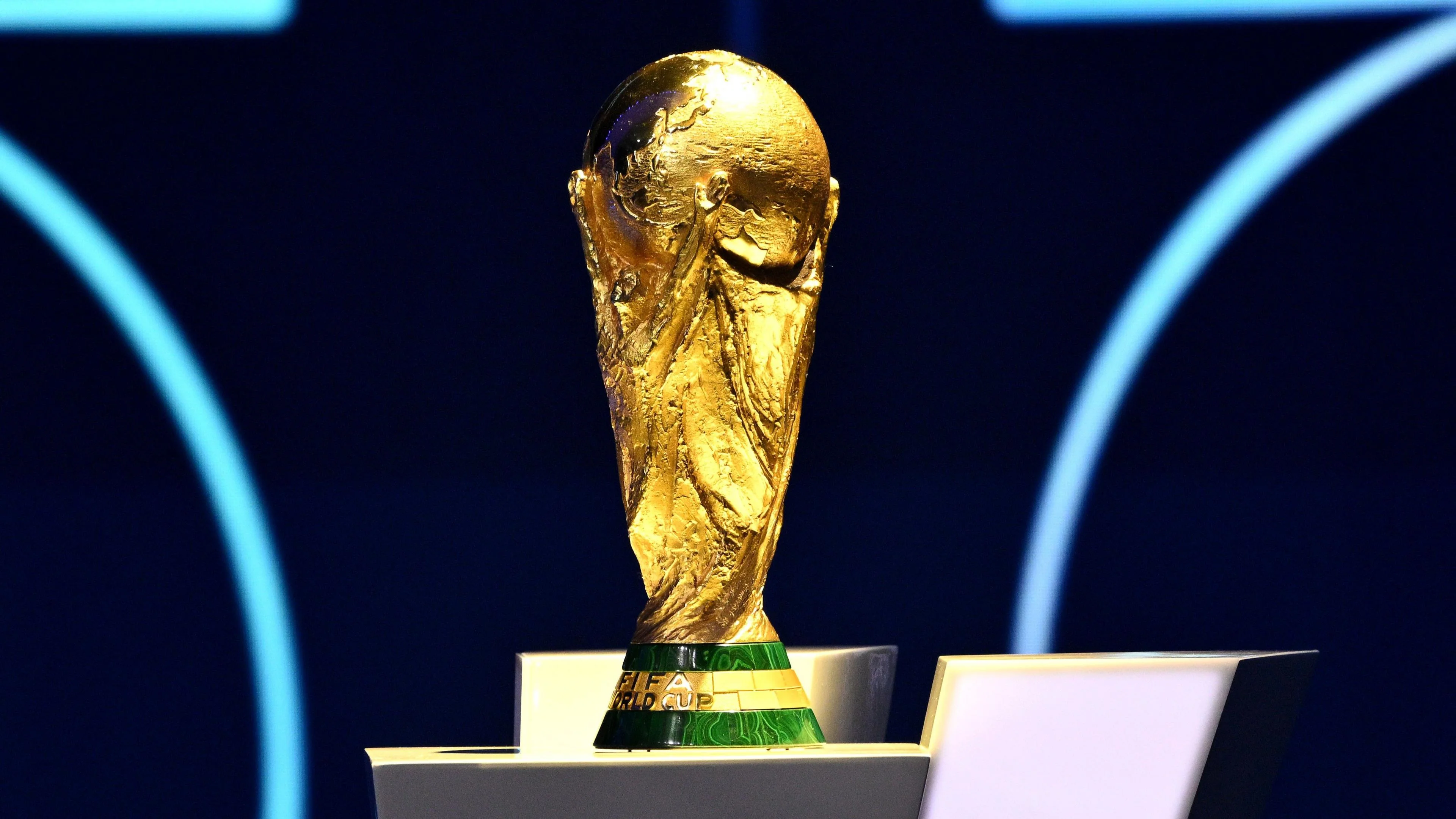
Read Full Story →The men's World Cup trophy story runs from the Jules Rimet era to the current 18-carat gold design introduced in 1974.
Read Full Story →The first FIFA World Cup was played in Uruguay, where the hosts beat Argentina 4-2 in Montevideo and set the template for every edition that followed.
Brazil won its first title in Sweden, and a 17-year-old Pelé emerged as the face of a team that would go on to define World Cup greatness.
Brazil's 1970 team won a third World Cup and permanently kept the Jules Rimet Trophy, turning that tournament into one of the most celebrated editions ever.
Argentina lifted the trophy in Mexico with Diego Maradona at the center of the tournament, producing one of the defining individual World Cup runs.
South Africa became the first African host nation, and Spain completed its golden era with a first World Cup title after beating the Netherlands in the final.
The Qatar final between Argentina and France became one of the most dramatic championship matches in tournament history, with Lionel Messi lifting the trophy at last.
World Cup history has also been shaped by expansion. The competition moved from small early fields to 24 teams, then 32, and now the 2026 edition across the United States, Mexico, and Canada will become the first tournament with 48 teams and 104 matches.
FWCUMC publishes World Cup 2026 coverage with a priority on clarity, source transparency, and match-cycle relevance. We separate verified updates from developing stories, and we revise headlines when official federations, clubs, or FIFA communications confirm new details.
For fast-moving topics, such as squad availability, travel guidance, or fixture updates, our team reviews source timestamps and updates affected pages so readers can track what changed and when. Major corrections are documented under our Corrections Policy.
To explore related sections, visit the Teams hub, match schedule, and standings pages for structured updates.
Editorially, this page is designed to connect short-form updates with deeper context pages so users can move from a headline to complete team, player, and tournament background without relying on fragmented sources.