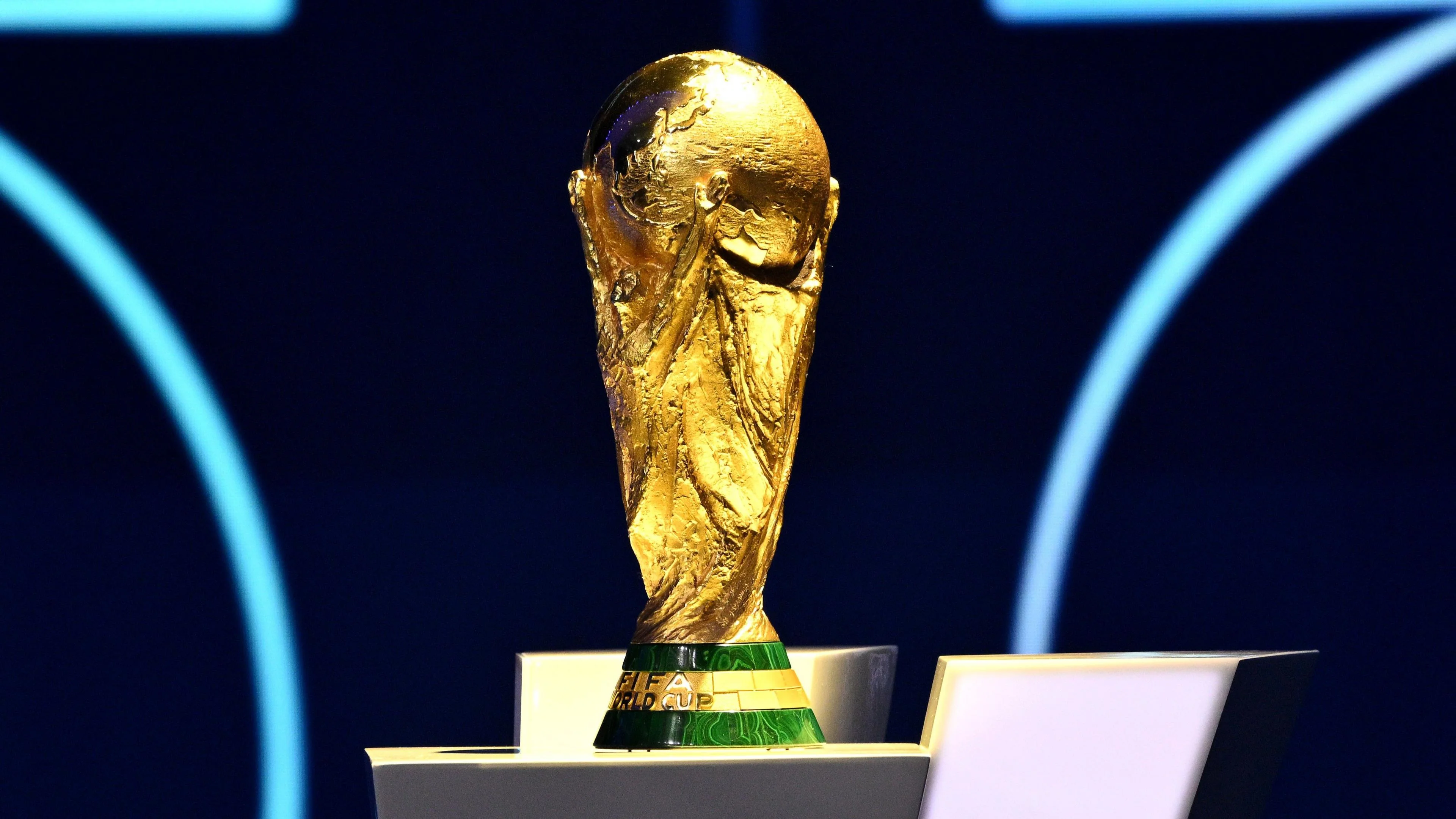
Match Preview
Brazil vs France - Road to 26 Friendly at Gillette Stadium March 26
Brazil and France meet in Foxborough for a marquee March friendly that gives both teams one more World Cup test.
Stay up to date with breaking news, team announcements, player interviews, and exclusive stories as we approach the 2026 FIFA World Cup.

Related Reading
The friendly preview and the all-time head-to-head guide for this matchup.
Brazil and France meet in Foxborough for a marquee March friendly that gives both teams one more World Cup test.
A simple guide to the build-up phase before World Cup 2026, including the official FIFA Series 2026 framework.
France leads the record by a small margin, and the March 2026 meeting gives Brazil a fresh chance to answer.
Analysis Desk
Formation guides and team-shape analysis for fans who want to follow World Cup 2026 with a tactical lens.
A tactical breakdown of width, pressing, the single pivot, and why the 4-3-3 still shapes so many elite tournament teams.
How the classic two-bank shape still wins space, transitions, and second balls in modern international football.
A clear guide to the back three, wing-back workload, and the central overloads that make 3-5-2 so useful in big matches.
Why the 5-3-2 still matters for deep defending, box protection, and direct counterattacks in tournament football.
The double-pivot guide covering number 10 roles, pressing shape, and why 4-2-3-1 still travels so well to a World Cup.
Spain still controls matches through possession, but Luis de la Fuente now adds more direct wing threat and faster final-third attacks.
France stays dangerous through compact structure, elite depth, and the freedom it creates for Mbappe in transition-heavy matches.
Brazil still has elite wide talent, but the biggest tactical question is how well the team protects itself behind the attack.
Argentina still looks like one of the most complete tournament teams, with Scaloni balancing support around Messi and the midfield core.
England's 2026 outlook depends on how well the new structure around Rice, Bellingham, Kane, and Saka turns talent into tactical control.
Nagelsmann's Germany is built around higher pressing, quicker vertical play, and the attacking quality of Wirtz and Musiala.
Portugal mixes control and creativity, with Bruno Fernandes, Bernardo Silva, and Ronaldo shaping a flexible attacking system.
The Dutch still value structure and width, but Koeman's team now leans on a more pragmatic balance around a strong defensive spine.
Pochettino's USA should press harder, counter faster, and lean on home energy in a more aggressive 2026 setup.
Mexico's 2026 outlook depends on compact structure, home pressure management, and more decisive attacking play under Aguirre.
Canada looks built for pressing and transitions under Jesse Marsch, with a clear game model suited to a home tournament.
Morocco remains dangerous through compact defending, quick transitions, and one of the most reliable tournament structures outside the favorites.
Japan's 2026 model still centers on coordination, pressing, and fast support play once the game becomes active.
South Korea stays most threatening when Son leads quick transition attacks from a compact back-four structure.
Bielsa's Uruguay brings front-foot pressure, direct running, and the old competitive edge in a much more aggressive package.
Colombia heads toward 2026 with Nestor Lorenzo's balance, James Rodriguez's creativity, and one of the cleaner transition structures in South America.
Which teams press best before 2026, why the high press still matters, and where aggressive pressure can still win major matches.
A guide to the strongest counterattacking teams before 2026, from France and Morocco to Japan, Uruguay, and Colombia.
Which teams control the ball best before World Cup 2026, and why possession still matters when tournament matches get tight.
Why dead-ball quality still decides tournaments, and which teams look strongest from corners, free-kicks, and second phases before 2026.
The biggest tactical changes shaping World Cup 2026, from hybrid formations and rest defence to smarter pressing and set-piece detail.
A ranking of the best pressing teams before World Cup 2026, including what separates an elite press from a risky one.
Which teams are hardest to break down before 2026, and why compactness, calmness, and transition control still define elite defenses.
Which teams attack best before World Cup 2026, and what gives them the strongest chance to score heavily in the tournament.
A current favorite guide to World Cup 2026, with Spain, France, Argentina, England, Brazil, and Portugal leading the early contender picture.
A researched top 10 ranking of the current title favorites, with Spain, France, England, and Argentina leading the strongest contender cluster.
Why Norway, Colombia, Morocco, and Japan look like the strongest outsider teams before World Cup 2026.
A measured look at the teams getting a little more 2026 hype than their current balance, control, or tactical ceiling supports.
Why Norway, Colombia, Morocco, Japan, and Uruguay deserve more respect before the tournament conversation fully catches up.
A simple guide to reading pressing, full-back movement, rest defence, transitions, and the small clues that explain a match.
The current coaching map for the 42 direct qualifiers and the six play-off entrants still fighting for the last places.
A top 10 ranking built around titles, finals, tactical control, and the coaches who best understood the tournament itself.
How Pochettino wants the USA to press harder, attack faster, and use home energy without losing tactical control.
Why Deschamps still gives France one of the clearest tournament structures and one of the strongest World Cup cases.
How de la Fuente modernized Spain, mixed control with direct threat, and helped turn the side into a top favorite.
How Nagelsmann is pushing Germany toward a higher press, quicker attacks, and a much more modern tournament identity.
Why Portugal now looks more balanced under Martinez, and how that balance could matter in the biggest matches.
Why Scaloni still gives Argentina one of the strongest coach-team combinations in the whole 2026 field.
A researched look at Dorival Junior's role in Brazil's 2026 cycle and why that chapter later gave way to a new direction.
A tactical look at Dorival Junior's Brazil bridge phase, why the structure never fully settled, and why Brazil later turned to Carlo Ancelotti.
How Koeman has made the Netherlands more pragmatic, more balanced, and more useful in knockout football.
Why Marsch's pressing and transition game gives Canada a very clear identity for a home World Cup.
What really changed in the USA coaching switch, and why the move was about tactical personality as much as results.
A current ranking of the coaches most likely to shape the tournament through structure, game management, and tactical clarity.
How FIFA builds the referee team through evaluation, fitness work, VAR support, and tournament-specific preparation.
A clear guide to VAR, goal-line technology, semi-automated offside, and what is or is not confirmed for 2026.
A deeper tactical breakdown of Scaloni's Argentina, from compact defending to Messi support and midfield balance.
A tactical guide to Deschamps' France, built around compact structure, transition threat, and knockout control.
How Tuchel is reworking England through tighter structure, sharper pressing, and better midfield protection before 2026.
How de la Fuente mixes Spain's control game with more direct wing threat and faster final-third attacks.
A deeper tactical guide to Nagelsmann's Germany, built around higher pressing and fluid attacking rotations.
How Martinez uses Portugal's talent with calmer buildup and better rest defence before 2026.
Why Koeman's Netherlands now looks more pragmatic, more balanced, and more tournament-ready.
A researched look at Tedesco's Belgium cycle and why the team later changed coaches before 2026.
How Pochettino wants the USA to press, attack vertically, and handle home-World-Cup pressure.
A researched look at Lozano's Mexico cycle and why Javier Aguirre later replaced him before 2026.
How Marsch wants Canada to press, run forward early, and use co-host energy in 2026.
Why Regragui's Morocco remains one of the clearest compact-and-transition teams in the tournament field.
A researched look at Cisse's Senegal cycle and why the team later moved to Pape Thiaw before 2026.
How Moriyasu has made Japan one of the clearest pressing and transition teams outside the favorite tier.
How Clarke builds Scotland through compact shape, wing-back structure, and low-margin tournament control.
How Solbakken balances Norway's direct threat and collective shape around one of the tournament's top finishers.
Why Dalic's Croatia still relies on midfield calm, knockout maturity, and one of football's most proven tournament models.
How Yakin makes Switzerland difficult through balance, discipline, and strong central control.
How Rangnick's Austria uses pressing, counter-pressing, and intensity to unsettle stronger teams.
How Bielsa's Uruguay turns pressure and vertical attacks into one of the tournament's most disruptive tactical styles.
How Lorenzo has built Colombia through compact structure, creativity, and one of the best balance profiles in South America.
How Beccacece gives Ecuador aggression, athletic balance, and real outsider potential for 2026.
How Alfaro rebuilt Paraguay into a compact, hard-running, transition threat and brought the team back to the World Cup.
Why Garcia is not Saudi Arabia's current 2026 coach, and what his short cycle did and did not change tactically.
A researched look at Stojkovic's Serbia cycle and why the coaching picture moved on before March 2026.
How Riemer tried to push Denmark toward a more offensive and aggressive identity, even though the team is outside the current field.
How Probierz set Poland up, why the cycle broke down, and why Jan Urban now owns the live 2026 picture.
A current ranking of the strongest 2026 coaches based on tactical clarity, tournament record, and likely impact.
The current coach map for the 42 direct qualifiers and the six play-off entrants still chasing the last two places.
Road to 2026
Confederation guides, qualification routes, and play-off stories are loading.
Confederation breakdowns, team qualification journeys, and play-off explainers will appear here automatically.
Head To Head
Rivalry previews, team comparisons, and side-by-side 2026 guides are loading.
Head-to-head previews, rivalry guides, and side-by-side World Cup 2026 comparisons will appear here automatically.
Awards Desk
Golden Boot, Golden Ball, and award-race guides are loading.
Golden Boot trackers, winners history, and player-of-the-tournament prediction pages will appear here automatically.
Answers Desk
Simple tournament explainers and quick-answer guides are loading.
Tournament basics, format explainers, and quick answers will appear here automatically.
Travel & Support
Travel, ticket, and host-country fan guides are loading.
City-by-city planning, ticket strategy, hotels, and matchday travel guides will appear here automatically.
Watch Guides
Country, broadcaster, and language TV and streaming guides are loading.
If this section does not refresh automatically, use the full broadcasting hub to browse every country guide and featured broadcaster page.
Legacy
World Cup history features and tournament explainers are loading.
Classic tournament reviews, all-time records, and format explainers will appear here automatically.
FWCUMC publishes World Cup 2026 coverage with a priority on clarity, source transparency, and match-cycle relevance. We separate verified updates from developing stories, and we revise headlines when official federations, clubs, or FIFA communications confirm new details.
For fast-moving topics, such as squad availability, travel guidance, or fixture updates, our team reviews source timestamps and updates affected pages so readers can track what changed and when. Major corrections are documented under our Corrections Policy.
To explore related sections, visit the Teams hub, match schedule, and standings pages for structured updates.
Editorially, this page is designed to connect short-form updates with deeper context pages so users can move from a headline to complete team, player, and tournament background without relying on fragmented sources.